Natural gas heating remains a smart choice for Middlefield, CT households that want dependable warmth without runaway energy costs. Winters in Middlesex County swing from mild to subzero in a day, and a well-sized, well-maintained gas furnace handles those swings with steady comfort. This article explains how natural gas furnaces work, what to watch for, when to repair or replace, and how Direct Home Services supports homeowners near Lake Beseck, Reeds Gap, Baileyville, Jackson Hill, and Rockfall. It also covers practical steps to lower fuel use, protect indoor air quality, and avoid mid-season breakdowns.
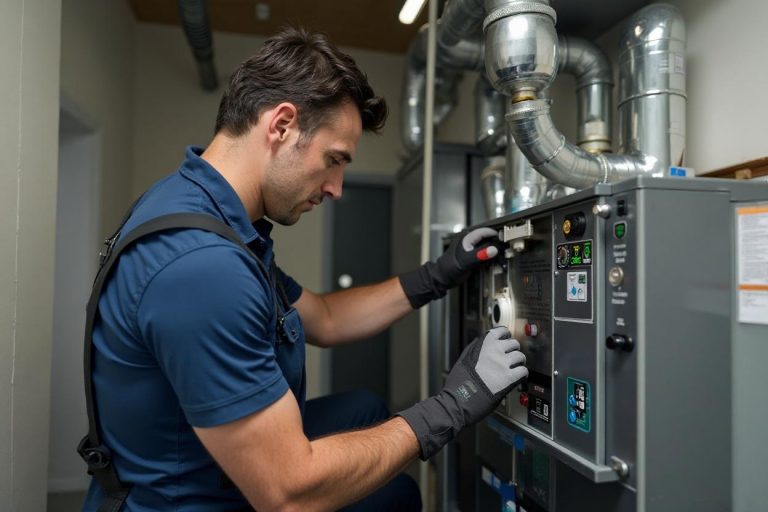
Direct Home Services provides gas furnace services across Middlefield, Rockfall, and nearby towns like Meriden, Wallingford, Middletown, Durham, and Higganum. The team services natural gas and propane systems, including high-efficiency condensing furnaces suited to New England weather. For residents near Powder Ridge, Lyman Orchards, Wadsworth Falls State Park, and the Coginchaug River, help is close by, day or night.
Why natural gas heating fits Middlefield homes
Natural gas furnaces deliver fast, even heat. Forced-air systems warm the heat exchanger, push air across it with the blower fan, and distribute warm air through ducts. A correctly sized furnace with modern controls keeps indoor temperatures steady through January cold snaps and damp March thaws. In many Middlefield homes, the same ductwork also supports central air in summer, which keeps costs and complexity in check.
Homeowners value three things most: reliability, safety, and cost control. Gas furnaces check these boxes when the system is installed to code, tuned annually, and matched to the home. Direct Home Services installs and maintains single-stage, two-stage, and modulating furnaces, including high-efficiency condensing models rated 90% AFUE and higher. These units extract more heat from the fuel and send less waste energy up the vent pipe. In real terms, this translates into lower gas bills and quieter operation.
The basics: how a gas furnace works and why maintenance matters
Every cycle follows a clear sequence. The thermostat calls for heat. The draft inducer motor clears the heat exchanger and flue. The ignitor lights the burner assembly. Gas flows through the gas valve. Hot combustion gases warm the heat exchanger. Then the blower fan pushes room air across the exchanger and through the ducts. Safety controls like the limit switch and flame sensor monitor the process.
If any part falls out of spec, the furnace may shut down to protect the home. Regular maintenance keeps that sequence smooth. During a 21-point safety inspection, technicians measure gas pressure, check the burner flame, verify inducer performance, and confirm temperature rise. They also clean the flame sensor so it reliably detects ignition, and they replace or wash the air filter so the blower does not struggle. A clean, tuned furnace runs quieter, lasts longer, and uses less gas.
Direct Home Services specializes in inspecting the heat exchanger for hairline fractures and cleaning the flame sensor to prevent ignition lockout. These two steps address the most serious safety risk and one of the most common no-heat calls. Hairline cracks in the heat exchanger can allow combustion gases to mix with household air, which raises carbon monoxide risk. Catching a crack early avoids unsafe operation and prevents unplanned replacements during a cold spell.
Warning signs a furnace needs attention
Middlefield homes show similar patterns as temperatures swing. Short cycling, uneven heating, or a yellow pilot flame often point to a developing problem. Waiting can raise energy use or stress other parts, which adds cost.
Short cycling describes frequent on-off cycles. In many cases, a clogged air filter is the culprit. Restricted airflow drives temperatures past the limit switch setting and forces a shutdown. Sometimes a failing draft inducer motor or a mismatched thermostat setting causes the same symptom. If short cycling continues after a new filter, have a technician test the inducer current draw and confirm the temperature rise.
Metallic banging, thumping, or whistling noises call for a quick check. Banging can be duct expansion or a blower issue. A high-pitched whistle often points to a filter that is too restrictive for the system, or a duct leak near a connection. Persistent metallic sounds combined with burner ignition delays can indicate a failing ignitor or dirty burner assembly.
Flame color matters. A steady blue flame signals correct combustion. A yellow or flickering flame can indicate a burner problem, a dirty or misaligned burner, or improper gas pressure. If the pilot (on older systems) or main burners show yellow, call for service. The technician should check the gas valve regulation, clean the burner assembly, and confirm the draft.
Slow or weak airflow can stem from a dirty blower wheel, a failing blower motor, or an undersized return. It also shows up as uneven heating, with second floors either overheating or staying cold. A quick static pressure measurement and a look at duct design can guide practical fixes. Sometimes the solution is as simple as upgrading to a MERV 11 filter instead of a MERV 13 if the system cannot handle higher resistance without modifications.
Rising gas bills with no change in weather often point to declining efficiency. Soot on the burner, a tired ignitor, or a failing draft inducer motor can all waste fuel. A tune-up resets combustion, confirms safe operation, and can shave 5% to 10% off seasonal usage depending on starting condition.
Repair vs. replace: how to decide
The decision comes down to age, safety, and total cost. If a furnace is under 10 years old and has a clean heat exchanger, repairs often make sense. Ignitor replacements, dirty flame sensors, faulty limit switches, and blower capacitor changes are common, quick repairs. On the other hand, a cracked heat exchanger or repeated inducer failures on a 20-year-old unit justify replacement. At that age, a jump from 80% to 95% AFUE can pay back quickly in Middlefield’s climate.
Two-stage and modulating furnaces offer better comfort in older colonial homes with mixed insulation levels. These units run at a lower fire rate most of the time, which evens out temperatures and reduces short cycling. In practice, homeowners see quieter heat, fewer cold spots, and steadier humidity in winter.
Direct Home Services installs high-efficiency condensing gas furnaces with modulating burners to manage Middlefield’s late-night temperature swings. The team sizes equipment based on heat loss, duct capacity, and room-by-room needs. The goal is a balanced system that heats the home evenly at design temperature, not a unit that blasts heat then shuts off.
Local knowledge matters in Middlesex County
Homes around Lake Beseck and Jackson Hill often have additions that complicate airflow. Attic returns can starve the blower in bitter cold when filters load up faster. Houses near Reeds Gap and Baileyville see wind exposure that drives heat loss on one side of the home. Duct sealing around accessible trunk lines and properly sized return paths can solve many comfort complaints without a full system change.
Direct Home Services provides priority heating repairs for homeowners throughout Middlefield and Rockfall in the 06455 zip code, as well as 06481 around Rockfall. Located just down the road from Lyman Orchards, the team provides rapid response to the Coginchaug Valley. Whether the call comes from near Powder Ridge Mountain Park & Resort or the Levi E. Coe Library area, technicians are close and familiar with local building styles.
What to expect during a professional tune-up
A well-run annual tune-up goes beyond a filter swap. At minimum, the technician should test combustion, confirm draft, check for carbon monoxide at the supply plenum, and inspect the heat exchanger with mirrors or a scope if access allows. The burner assembly should be cleaned if the flame shows yellow tips or irregular patterns. The flame sensor needs a light polish to prevent nuisance lockouts. The inducer motor should be measured for amperage draw and noise. The blower compartment should be cleaned, the blower wheel inspected, and motor bearings checked if applicable. Finally, the thermostat should be calibrated, and safety controls including the limit switch tested.
Direct Home Services performs a 21-point safety inspection that focuses on the integrity of the heat exchanger, inducer performance, and correct gas pressure. The team documents readings so homeowners can compare year to year. That record helps spot early wear on parts like the gas furnace services draft inducer motor or blower capacitor before they fail in January.
Common parts and what they do
Understanding key components helps a homeowner judge urgency.
The heat exchanger transfers combustion heat to household air without mixing gases. It must be intact. A crack is a replacement-level issue.
The burner assembly mixes gas and air for controlled combustion. Dust and rust can skew the mix and waste fuel.
The ignitor lights the gas. Silicon nitride and silicon carbide ignitors often last 3 to 7 years depending on cycles. A weak ignitor can delay flame, cause clicks, and trigger lockouts.
The draft inducer motor pulls combustion gases through the heat exchanger and out the vent pipe. If it slows or fails, the furnace will shut down for safety. A failing unit may whine or rumble at start-up.
The blower fan moves heated air through ducts. Dirt on the blower wheel reduces airflow and raises energy use. Motors can fail from heat or bearing wear.
The gas valve meters fuel. If pressure is wrong, efficiency drops and flames turn unstable.
Safety controls include the flame sensor, limit switch, thermocouple on older systems, and pressure switches for draft. They keep operation safe and should never be bypassed.
Filters matter more than most people think. Many Middlefield systems run best with MERV 8 to MERV 11 filters. MERV 13 can be used when duct static pressure allows. If professional gas furnace services a new filter makes the furnace louder or rooms feel starved for air, ask a technician to measure static and recommend options like a larger media cabinet or return upgrades.
Choosing the right furnace: single-stage, two-stage, or modulating
A single-stage furnace runs full output every time. It is simple and cost-effective but can short cycle in mild weather. Two-stage models run at a lower stage most of the time and shift to high stage during cold snaps. Modulating furnaces vary the flame in small steps to match load precisely. In older Middlefield colonials with mixed insulation, two-stage or modulating models smooth temperature swings and reduce noise.
High-efficiency condensing furnaces capture extra heat by condensing water vapor from exhaust gases. They vent with PVC and produce condensate that must drain properly. In homes near the Coginchaug River with high ground moisture, routing and trapping the condensate line correctly prevents freeze-ups or backups.
Direct Home Services specializes in Carrier Infinity condensing furnaces and services major brands, including Rheem, Bryant, Goodman, York, Lennox, Trane, American Standard, and Mitsubishi hybrid systems. Systems can be paired with smart thermostats that stage heat correctly and provide data on run times and filter change reminders.
Real-world examples from Middlefield homes
A Rockfall homeowner near the Durham line reported frequent cycling and soaring gas bills in December. Inspection showed a clogged 1-inch filter and a blower wheel caked with dust. After a deep clean, a new media cabinet, and a MERV 11 filter, cycles lengthened and usage dropped by roughly 12% over the next cold snap.
A Lake Beseck ranch had cold bedrooms on the north side during strong winds. The furnace tested fine. Static pressure readings pointed to an undersized return. Adding one return grill and sealing supply boots cut the temperature spread from 6 degrees to 2 degrees on a 20-degree night.
A Jackson Hill cape had a yellow, wavering flame and a sulfur smell on start-up. The technician cleaned the burner assembly, adjusted manifold pressure at the gas valve, and polished the flame sensor. The flame turned steady blue. Carbon monoxide at the supply measured 0 ppm after the repair, and start-up became smooth and quiet.
Safety and carbon monoxide: sober checks homeowners should perform
Every home with fuel-burning equipment should have carbon monoxide detectors on each level and near bedrooms. Test them monthly and replace units every 5 to 7 years or per manufacturer guidance. If a detector alarms, step outside, call for service, and do not re-enter until cleared. A furnace that soots, creates headaches during operation, or produces a yellow flame needs immediate attention.
Homeowners can also look for water beneath the furnace cabinet on condensing models. Persistent water signals a clogged condensate trap or line. That can trip the pressure switch and shut down the furnace on a cold morning. Keep the area around the furnace clear so technicians can see and service the equipment.
Practical steps to cut heating costs without sacrificing comfort
- Replace or clean filters on a regular schedule. In Middlefield, plan every 30 to 90 days depending on filter type, pets, and renovation dust. Set the thermostat to a stable schedule. Two-stage and modulating furnaces shine with smaller set-backs. Large swings can cause long recovery cycles. Seal accessible duct joints with mastic or UL-181 tape in basements and mechanical rooms. This keeps heated air in the system. Consider an energy audit to locate insulation gaps in knee walls, rim joists, and attic hatches. Plugging leaks reduces furnace run time. Use a MERV rating that your ductwork can handle. Higher MERV is not always better if airflow drops and energy use rises.
Why homeowners call Direct Home Services for gas furnace services
Experience with local housing stock, careful diagnostics, and fast response during storms set a clear standard. Homeowners near Powder Ridge and through the 06455 area see quick arrival times because the team is based nearby. The company provides 24/7 emergency dispatch during blizzards and cold snaps, and every technician holds a Connecticut S-1 license and NATE certification. That matters when bringing older venting up to code or setting gas pressure on a high-efficiency furnace.
Direct Home Services offers Energy Star rated systems with financing options and handles both natural gas and propane furnaces. As a Carrier authorized specialist, the team installs Infinity series furnaces for high-efficiency comfort. They also maintain and repair Rheem, Bryant, Goodman, York, Trane, Lennox, American Standard, and Mitsubishi hybrid systems.
Middlefield residents can request a $99 Seasonal Furnace Safety Inspection to prepare for the first frost. The inspection includes heat exchanger review, flame sensor cleaning, inducer amp testing, blower performance checks, and combustion verification. Clear documentation comes with each visit so homeowners can track system health year to year.
Service coverage and response in Middlefield, CT
Direct Home Services covers Middlefield and Rockfall, including 06455 and 06481, and responds across Middlesex County. Calls from near Lyman Orchards, Wadsworth Falls State Park, and the Levi E. Coe Library see quick dispatch thanks to proximity. The company also serves neighboring communities like Middletown, Durham, Meriden, Wallingford, and Higganum. Whether it is an emergency heating service at midnight or a planned furnace installation, the process is straightforward: a clear diagnosis, a firm price before work, and code-compliant completion.
What homeowners can do before calling for service
Homeowners can handle a few checks safely. Confirm the thermostat is set to heat and above room temperature. Check the breaker and furnace switch. Replace a dirty filter. For high-efficiency units, look for standing water in or around the furnace that might indicate a condensate blockage. If these steps do not restore heat, call for a professional. Repeated resets or attempts to relight older pilots without understanding the cause can make matters worse.
Middlefield heating FAQ
How often should a furnace be tuned? A yearly tune-up before heating season is best. In Middlefield, schedule in early fall so there is time to address parts that show early wear.
What MERV filter should be used? Many systems run best at MERV 8 to MERV 11. If allergies are severe, MERV 13 can work if duct static stays within equipment limits. A technician can test and advise.
How long do furnaces last? Typical lifespans range from 15 to 20 years. High-efficiency models may need inducer or control replacements during that span. Heat exchanger integrity is the life-limiting factor.
What are signs of a cracked heat exchanger? Soot, unusual odors, rollout or flame flicker when the blower starts, and elevated carbon monoxide readings at the supply. Only a licensed technician should diagnose and confirm.
Do smart thermostats help? Yes, when matched to the furnace type. Staging logic and adaptive algorithms can reduce short cycling and improve comfort in two-stage and modulating systems.
Are propane furnaces serviced as well? Yes. Propane (LP) systems are common where natural gas lines are unavailable. Combustion tuning and venting checks are similar, and parts are largely the same.
The Direct Home Services promise
- 24/7 emergency service for furnace failures during Connecticut blizzards CT S-1 licensed, NATE-certified technicians who follow local mechanical codes Energy Star rated systems from Carrier, Trane, Lennox, American Standard, Rheem, Bryant, Goodman, and more Financing options for high-efficiency upgrades and heating system replacement Clear pricing and a parts and labor warranty on repairs
Homeowners across Middlefield rely on quick, accurate diagnostics and honest advice. Some calls end with a cleaned flame sensor and a fresh filter. Others lead to a new high-efficiency condensing furnace sized to the home’s load and duct capacity. Either way, the goal is the same: safe, steady heat at a fair operating cost.
Ready for dependable heat this winter?
If the furnace short cycles, the pilot flame looks yellow, or the blower motor struggles, schedule service before the next cold front moves through Middletown and the Coginchaug Valley. Direct Home Services is Middlefield’s source for gas furnace services, from emergency heating service to annual tune-ups and high-efficiency installations. Request your $99 Seasonal Furnace Safety Inspection or get a free estimate on a new Energy Star certified system for your home near Lake Beseck, Jackson Hill, Reeds Gap, or Baileyville.
Schedule your furnace repair today and keep your Middlefield home warm, safe, and efficient all winter.
Direct Home Services provides HVAC repair, replacement, and installation in Durham, CT. Our team serves homeowners across Hartford, Tolland, New Haven, and Middlesex counties with energy-efficient heating and cooling systems. We focus on reliable furnace service, air conditioning upgrades, and full HVAC replacements that improve comfort and lower energy use. As local specialists, we deliver dependable results and clear communication on every project. If you are searching for HVAC services near me in Durham or surrounding Connecticut towns, Direct Home Services is ready to help.
Direct Home Services
57 Ozick Dr Suite I
Durham,
CT
06422,
US
Phone: (860) 339-6001
Website: https://directhomecanhelp.com/
Social Media: Facebook | Instagram
Map: Google Maps